
How do you test liquid coatings? Try the German ERICHSEN 419 Levelling and Sagging Tester from Sinotime.
The ERICHSEN 419 Levelling and Sagging Tester comes in two models, 419 ASTM and 419 DIN, for different standards and functions. The 419 ASTM tests both levelling and sagging, while the 419 DIN tests sagging only.
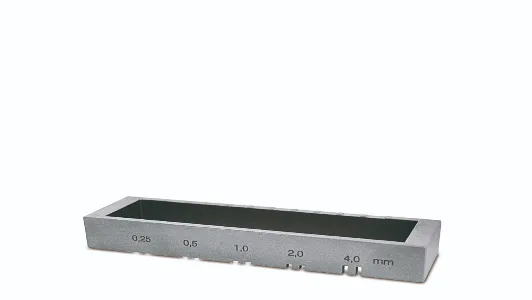
A coating's levelling affects the quality of the film it forms. If levelling is too poor, marks on the film surface do not flow out and cause coating defects. If it is too good, the film tends to sag and run. Sagging happens when a coating is applied to a vertical surface: under gravity, part of the wet film flows downwards before it dries, leaving the top thinner and the bottom thicker, or in bad cases forming drops or waves. Strong sagging is a sign of poor application properties and should be avoided.

Some related questions about coatings:
Components that have a large effect on coatings:
1. Solvents. A change of solvent directly affects its solvency for the coating, and solvency has a very marked effect on viscosity. If the solvent changes significantly, the final viscosity of the same coating will also differ noticeably. (Example: CAB dissolved in a different solvent gives a higher or lower viscosity.)
2. When the cellulose or thickener in a coating changes significantly, its viscosity also differs noticeably. (For example, nitrocellulose coatings made to the same formula with 1/2″ NC and 15″ NC differ greatly in viscosity; in waterborne coatings, a different thickener also has a big effect on viscosity.)
3. Pigments and fillers. In pigmented paints, pigments and fillers differ in oil absorption, density and pH, so changing them has a marked effect on viscosity. (For example, yellow pigments from different sources or grades differ in oil absorption, density and pH, so the same formula gives clearly different viscosities.)
4. Additives. In pigmented paints, additives also have a large effect on viscosity. For example, in black paint, a different dispersant in the mill base affects not only grinding but also viscosity. Some additives also have a big effect on viscosity during storage.
Not sure what to test in a coating, to which standards, or how to fix problems? These are the three ultimate testing questions. Insufficient gloss, poor solvent resistance, poor adhesion, poor water resistance, slow curing, too many spots, foreign matter or residues – which tests should you run? These are the problems that trouble every coatings company.
Coatings
Coatings are traditionally called "paint" in China. A coating is applied to the surface of an object to protect or decorate it and forms a continuous film that adheres firmly to it. It is usually a viscous liquid based on resin, oil or emulsion, with or without pigments and fillers, plus suitable additives, made up with organic solvents or water.
Protective coatings
By function, protective coatings fall into three main groups:
Fire-retardant coatings: decorative fire-retardant coatings, fire-retardant coatings for wood, steel structures, concrete structures and tunnels.
Anti-corrosion coatings: zinc-rich primers, phenolic anti-rust paints, polyurethane anti-rust paints, vinyl wash primers, silicone heat-resistant paints, coal-tar pitch varnishes, epoxy coal-tar primers and topcoats, epoxy bitumen anti-rust paints, high-build aluminium epoxy bitumen anti-rust paints, high-build epoxy bitumen anti-rust paints, epoxy coal-tar pipeline paints, bitumen varnishes, bitumen boiler paints and so on.
Waterproof coatings: acrylic emulsion, polyurethane, polymer-modified cementitious, acrylamide grouting, emulsified bitumen, coloured emulsified bitumen, cationic and non-ionic emulsified bitumen, high-build bitumen, cut-back bitumen mastic, fatty-acid emulsified bitumen, bitumen damp-proofing, high-build bitumen damp-proofing, bentonite emulsified bitumen, lime emulsified bitumen, amino polyvinyl alcohol emulsified bitumen, acrylic resin emulsified bitumen, bitumen phenolic and bitumen neoprene coatings, and so on.
Fire-retardant coatings
Tests for protective coatings:
Environmental: benzene, toluene and xylene content, free TDI (toluene diisocyanate), soluble heavy metals, VOC, chlorinated hydrocarbons, formaldehyde and so on.
Basic properties: appearance, viscosity, density, fineness of grind, flash point, flow time, non-volatile content, binder acid value, saponification value, softening point, glass transition temperature, storage stability and so on.
Application properties: workability, spreading rate, drying time, recoat time, filling, sandability, tack, scrub resistance, stain resistance, sag resistance, freeze–thaw resistance, fire performance and so on.
Film durability: resistance to liquids (water, acids, alkalis, solvents, oils), humidity resistance, heat resistance, damp heat, neutral salt spray, light ageing (UV, xenon arc, carbon arc and so on), mould resistance and so on.
Film properties: appearance, colour, gloss, thickness, hardness, adhesion, transparency, hiding power, yellowing resistance, scratch resistance, impact resistance, abrasion resistance, bend test, flexibility, Buchholz indentation, scratch test, blocking resistance, cupping test and so on.
For more on coatings and test instruments, follow Sinotime Industrial Ltd.
Sinotime specialises in surface testing instruments with a complete range. The European and American brands we represent are leaders in their field. As a national agent, Sinotime has offices in Beijing, Shanghai, Shenzhen and Hong Kong. Note: products not bought from Sinotime are not covered by our warranty. We hold certificates for the products we represent.